
Minimum order quantity in China: how to negotiate a workable first order
Editorial illustration
GURI Journal · Published 31 October 2026
A low minimum order quantity can hide a substantial commitment. The factory may agree to make fewer finished units if the buyer pays for a full batch of custom material, a packaging run or dedicated tooling. The number of products decreases, but the money committed to the project may change very little.
GURI starts an MOQ discussion by identifying the constraint. Production setup, raw-material purchasing and custom component availability are different problems. They need different responses. A useful negotiation produces a defined product and an affordable commitment, rather than a smaller number obtained through an unexplained substitution.
Establish what the quoted minimum covers
Ask for minimums by style, colour, size, material and packaging version where those distinctions apply. A total order spread across many variants can create more purchasing and setup work than the same quantity in a focused assortment. Do not assume the total automatically satisfies each component minimum.
Separate stock purchases from new production. A supplier may sell a small quantity of available inventory without being able to reproduce it on those terms. That can suit a one-off opportunity, but it is a different proposition from a product intended for regular replenishment. Ask what happens after the current stock runs out.
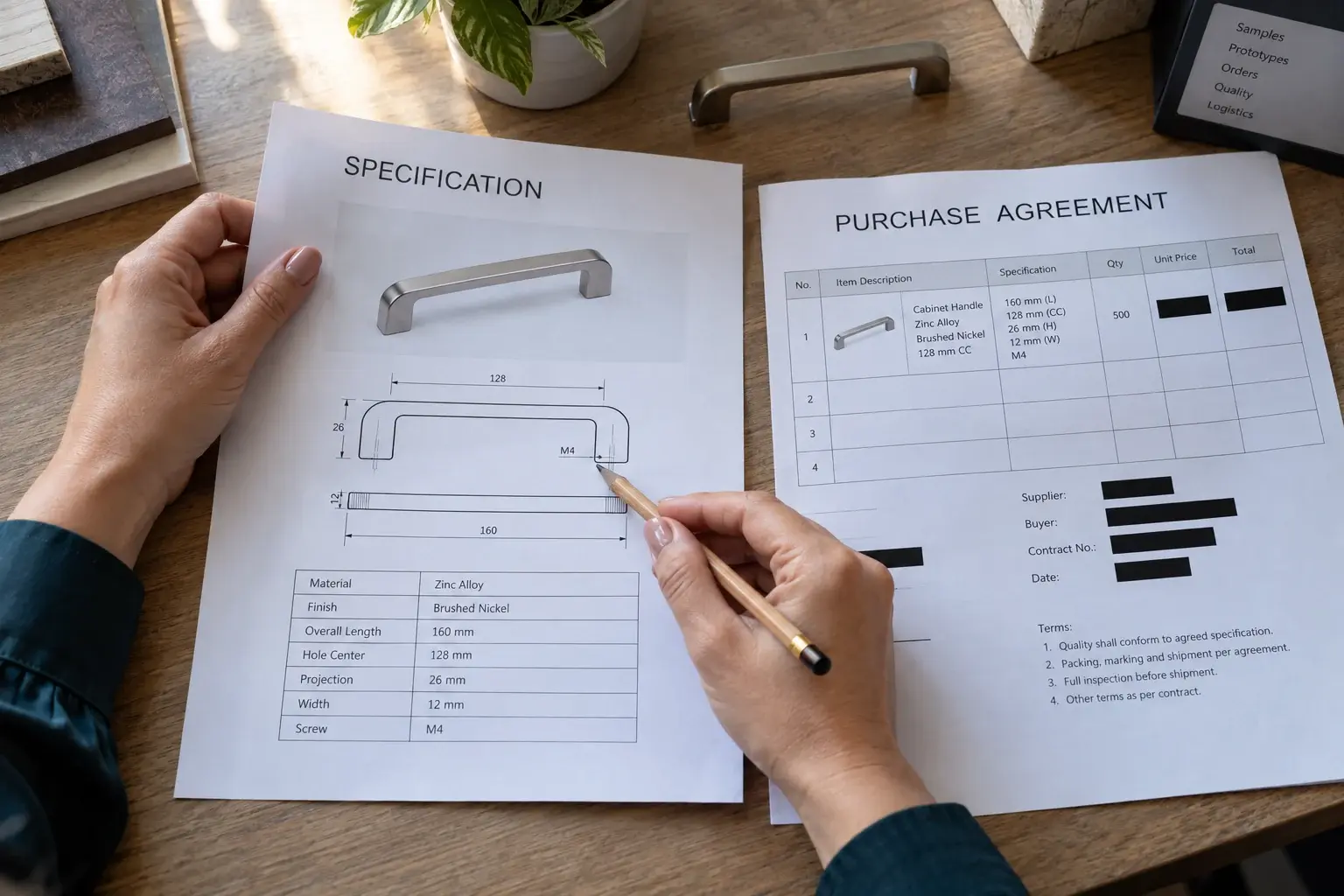
Also distinguish branding an existing item from changing its construction. A new opening, connector or internal component may require development even when the outside looks familiar. A catalogue MOQ is meaningful only for the configuration and commercial conditions to which it applies.
Find the operation that sets the limit
Ask which cost or supply constraint prevents a smaller run. Is the factory covering machine preparation, buying a custom colour or meeting another manufacturer's component minimum? You do not need its entire cost structure, but you do need enough explanation to compare realistic alternatives.
If material availability is the issue, an approved stock material may help. Check its suitability rather than treating availability as proof of equivalence. A changed coating, stiffness or dimension can affect how the product works. Approve the actual alternative before using its lower commitment in the final comparison.
If setup is the main issue, compare a small-run surcharge with the cost of surplus inventory. Paying more per unit can be sensible when it limits an uncertain first launch. It can also make the project uneconomic once development and shipping are included. The decision needs a complete calculation, not a rule that smaller is always better.
Account for unused materials
If you fund material beyond the first run's needs, record its quantity, ownership, location and expected use. Clarify how the balance will be reported after production and whether it can be transferred. An informal promise to keep it for the next order leaves important questions unanswered.
Consider what happens if the colour sells poorly or the product changes. Remaining material may be useful, but it is not a guaranteed future saving. Its condition and suitability also matter. A purchasing decision should not treat every unused component as an asset that will certainly be consumed.
Avoid double counting when comparing quotes. One price may include the full material purchase while another covers only the material used in finished goods. Show the difference explicitly. Otherwise, the apparently expensive supplier may be funding a balance that the cheaper offer has simply omitted.
Simplify the assortment without losing its purpose
Reducing colours or sharing a component across styles can make a first run easier. Confirm that the shared component works for each product. Standardisation is useful only when it preserves the function and customer promise that justify selling the item.
Define what the trial order is meant to teach you. Testing a design, a price point and many colour options at once makes results difficult to interpret. A focused range can provide clearer evidence, provided it still includes the variants customers actually need.
Check any required assortment ratio. A supplier's mixed-order option may force you to buy slow-moving versions alongside the ones you want. Compare the cost of useful inventory, not merely the average unit price across a compulsory mix.
Approve a sample that represents the proposed run
List differences between the development sample and production materials. A hand-finished sample or temporary component may be appropriate during development, but it cannot silently become the reference for a different manufacturing process. Establish which version the reduced MOQ will produce.
Check the functions affected by each substitution. Separate swatches or component photographs do not always show how parts interact in an assembled product. Update the specification when a change is accepted so the buyer, factory and inspector use the same reference.
Record the scope of approval. If appearance is approved but a functional test remains open, say so. A broad approval message can otherwise be interpreted as permission to proceed with unresolved details. The purpose is to make the next production decision clear.
Agree the route to replenishment
Ask whether a repeat order can use remaining materials, whether individual variants can be reordered and when pricing must be reconfirmed. A small first run is less attractive if every later purchase requires another unwanted assortment or a change to the product customers chose.
Keep forecasts separate from purchase commitments. It is reasonable to explain the development plan, but promising a large future order solely to obtain a concession creates expectations the business may not fulfil. Negotiate terms that remain understandable if sales develop more slowly than hoped.
A workable minimum is a defined commercial commitment, with a checked product, visible development costs and a credible repeat-order plan. That gives the first shipment a useful role in building the business, even when it is not the lowest MOQ advertised in a supplier directory.