
Shoe inspection checklist: what to check before shipment from China
Editorial illustration
GURI Journal · Published 30 October 2026
A tidy row of shoe boxes can hide the wrong size mix, mismatched left and right shoes or labels prepared for an earlier material specification. A useful pre-shipment inspection therefore starts with the actual purchase order. Looking at a few attractive pairs is not enough to establish that the shipment matches it.
GURI treats the report as a decision document. It should show what was available, what was examined, which requirements were used and what remains unresolved. That makes the result useful for release, rework and later discussions about a particular batch.
Prepare the reference set before the visit
Give the inspector the current specification, approved samples, order matrix, measurement diagrams and label artwork. Include a clear list of changes made after sample approval. An obsolete reference can make an authorised change look like a defect while allowing a real deviation to pass unnoticed.
Agree on the sampling plan and acceptance criteria for the order's structure. A single inspection percentage does not explain coverage across styles, colours and sizes. Record the inspected quantity and any limitations, including products that were not accessible or not yet finished.
Confirm readiness for the intended inspection. If marking, sorting or packing remains unfinished, the report cannot establish the final state of those operations. Decide whether another check will be needed after completion rather than treating the first visit as universal approval.
Verify the pair and the assortment
Match the identifiers on both shoes, the individual box and the master carton. Confirm that each checked box contains a left and right shoe of the correct style, colour and size. The right number of boxes does not establish the right assortment.
Compare carton contents with the packing list, especially where sizes are mixed. After sorting or repacking, old carton labels may no longer describe the contents. Keep the records tied to the final shipment configuration.
Identify every finding by style, size, carton and inspected unit where practical. A close-up photograph without that context makes it difficult to find the affected goods or evaluate whether a defect clusters around a particular material batch.
Examine construction inside and outside
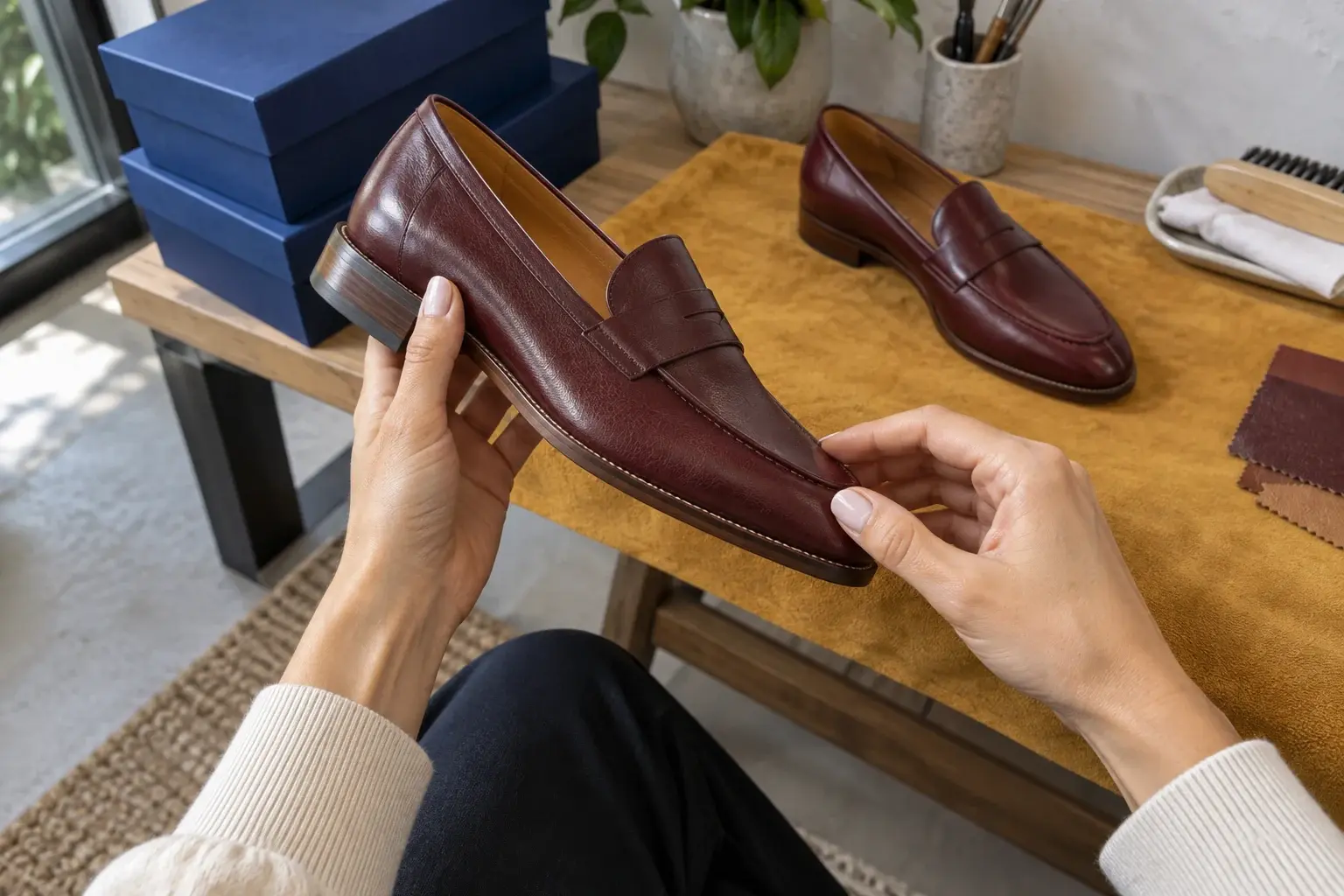
Compare shape, panel placement, stitching, finish and colour between the two shoes and against the approved reference. For textured or naturally variable materials, use agreed examples of acceptable variation. A photograph taken under different lighting should not become the sole basis for a colour decision.
Look inside the shoe for lining folds, exposed edges, rough seams and the position of the footbed. Operate fastenings using the agreed procedure. Record sharp projections and functional concerns separately from cosmetic observations so that the decision reflects their significance.
Photograph a questionable area before cleaning or repair. A quick attempt to remove a mark may alter the surface and make the original condition harder to assess. If the factory demonstrates a correction, retain both states and define how the rest of the affected stock will be checked.
Measure the specified dimensions
Use the agreed measuring method and record the requirement, tolerance and actual value. Do not confuse removable insole length, foot length and usable internal space. A matching size label alone says little about whether the shoe follows the approved construction.
Where a fit check is included, document its conditions and limits. One inspector's impression cannot establish comfort for every customer. SATRA's footwear services distinguish last assessment and fitting trials from other performance testing; a shipment check should not claim to replace that development work.
If a dimensional issue appears repeatedly, identify the affected sizes and production groups. Correcting the photographed pair does not establish the extent of the problem. Agree on further inspection or sorting where the evidence calls for it.
Keep visual checks separate from laboratory tests
A clean bond line is not proof of bond strength. SATRA TM411, for example, measures peel resistance of relevant sole-to-upper or bottom-layer bonds in suitable footwear constructions. Method applicability, sample preparation and acceptance limits need to be agreed; pulling a sole by hand is not an equivalent test.
Chemical restrictions, durability and performance claims also need appropriate evidence. Distinguish tests performed during the visit from reports supplied by the factory. For every supplied report, check whether the tested product and materials correspond to the production version.
Destination-market compliance is a separate requirement. An inspection report should not suggest that acceptable appearance automatically permits sale in every country. Identify outstanding regulatory or testing work before deciding whether shipment conditions have been met.
Check packing and close out findings
Inspect internal protection, contact between the shoes, box dimensions, printed information and master-carton condition. Check the agreed barcode or traceability operations where applicable. Reading one code successfully does not establish that all codes belong to the correct products.
For each finding, request the cause, affected quantity, proposed action and completion date. Sorting, repair and accepting a deviation are different decisions. Acceptance of a product change belongs to the authorised buyer, not to the inspector trying to keep the shipping schedule intact.
After rework, check both the original issue and possible consequences. Cleaning may change the finish; relabelling can mix sizes; a bond repair may require an appropriate performance assessment. Keep the final release decision with the report and any stated limitations so that the basis for shipment remains clear.