
Toy samples from China: setting approval criteria before production
Editorial illustration
GURI Journal · Published 31 October 2026
A toy sample can be convincing long before the product is ready for production. The colours look right, the main function works and the packaging photographs well. Yet the sample may contain different materials, manually finished parts or an unfinished instruction sheet. Approval needs to identify what has actually been accepted and what remains conditional.
The practical aim is to create a reliable connection between a reviewed sample and the production order. GURI recommends recording decisions by product version and by purpose: appearance, function, construction, packaging and the evidence needed for the intended market. This makes a short approval message much less likely to be misunderstood.
Define the intended user before evaluating details
Ask the manufacturer to describe the intended play pattern and age group, with the basis for that assessment. Review the product, its accessories, instructions and marketing together. An age mark on a box should not be selected simply because it makes a document request easier.
If there is uncertainty about age suitability or classification, refer it to a competent specialist. Changing a label is not a substitute for assessing the design and likely use. The buyer should provide an accurate product description rather than trying to obtain a preferred conclusion through wording.
Include every component of a set. Small accessories, packaging elements and power-related parts can matter even when the main item attracts most of the attention. Assessment should follow the configuration that the customer will receive.
Identify what kind of sample you have
A catalogue sample shows an available concept. A handmade prototype may demonstrate shape or function. A sample produced with the intended materials and process can answer different questions. Ask for the differences between the supplied item and the proposed production version in writing.
Record model, revision, date and accompanying information. When several iterations exist, avoid approving the colour of one, the mechanism of another and the packaging of a third without a final combined specification. The manufacturer needs one coherent set of instructions.
For custom development, clarify which features depend on final tooling or process settings. Do not assume that a carefully finished prototype proves repeatable assembly. Decide what further evidence is needed after the relevant production stage becomes available.
Separate observations from safety conclusions
The buying team can record appearance, completeness, dimensions and operation within intended conditions. Describe findings precisely: a missing accessory, an unclear assembly step or a mismatch against the agreed artwork. Such observations are useful without claiming that they establish overall safety.
Do not substitute improvised stress, heat or electrical experiments for appropriate testing, and do not ask children to demonstrate whether an uncertain design is safe. Questions about detachable parts, magnets, batteries and other features should go to qualified specialists with the relevant product information.
Check the instructions as part of the sample package. A reader unfamiliar with the project may spot ambiguous wording or a missing assembly step. This is a clarity review; it does not replace a professional assessment of age suitability or applicable safety requirements.
Plan testing around the product and market
For the United States, CPSC's toy safety guidance explains that firms must identify which sections of the toy standard apply to their particular product. The broader purchasing lesson is to give the testing specialist a complete description, not to request a generic package solely because another supplier used it.
Confirm the applicable requirements for the actual destination and the proposed production date. Do not present one market's reports as automatic permission to sell elsewhere. Ask what samples and supporting information are needed and how the submitted specimens must be identified.
Some work may consume or alter the specimens. Agree how a reference sample will remain available for later comparison and how laboratory specimens relate to the final version. If materials or construction change after submission, disclose that change before relying on the earlier results.
Write an approval that production can use
For each issue, record the required result, the responsible party and the evidence needed to close it. “Make it stronger” does not define a technical solution or a test criterion. The manufacturer develops the solution, while the relevant specialists help determine appropriate assessment.
Keep conditional approval explicit. Appearance may be accepted while a packaging revision or further assessment remains open. State which production activity may proceed and what must be completed before the next decision. A single blanket approval can hide these distinctions.
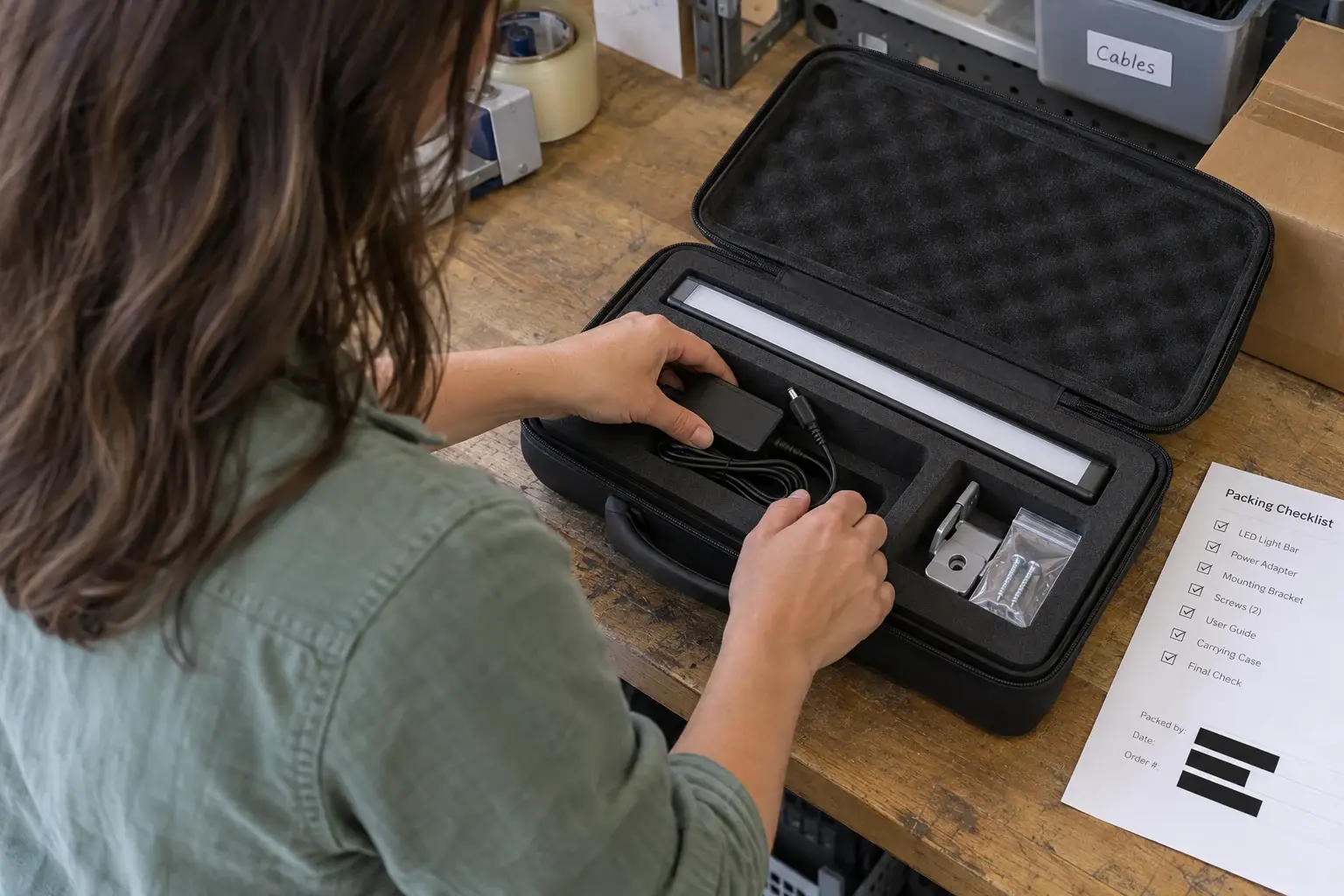
Include the actual packaging arrangement. Accessories must be present, identifiable and suitably placed in the finished unit. Where several versions share a similar box, consider how the production team will prevent incorrect inserts or mixed instructions.
Preserve the reference and verify the batch
Retain the agreed version with its records, and identify the reference available to the supplier and inspector. If separate physical samples are used, confirm that they represent the same accepted configuration. Store them in conditions appropriate to maintaining their usefulness.
A reference sample guides comparison; it does not prove the condition of every production unit. Agree the separate batch inspection and any other required controls before shipment. When a later order changes, return to the documented approval basis instead of assuming that a familiar product name preserves all the relevant characteristics.