
International negotiation agenda: prepare the decisions before the meeting
Editorial illustration
GURI Journal · Published 31 October 2026
A meeting invitation that says “discuss cooperation” leaves both teams with a great deal to guess. One side may bring a sales presentation; the other may expect a technical decision. The conversation can be friendly and still produce very little that either company can use. In a cross-border negotiation, different working languages and approval processes make that gap harder to notice.
GURI approaches an agenda as a description of the work the meeting can realistically advance. It should show the questions, the information needed to discuss them and the people who can contribute. It should also leave room for a useful conclusion that falls short of a final agreement: a calculation to prepare, a test to define or a missing assumption to verify.
Start with the current decision
Describe where the project stands before listing topics. Are the companies exploring whether there is a fit, comparing a defined offer or resolving the final conditions of a proposed order? Each stage needs a different discussion. Repeating a general introduction can be frustrating when the other team has already submitted a detailed proposal and is waiting for specific feedback.
State the next decision in practical terms. “Identify the information required for a revised quotation” is more useful than “agree a competitive price” when the product configuration is still unsettled. The first tells participants what to prepare and gives the meeting a realistic finish. The second can encourage negotiation over a number whose underlying conditions remain unclear.
Keep your internal preparation separate from the shared agenda. Your team may need to discuss acceptable options, resource constraints and approval limits. The counterpart needs a clear description of the subjects and requested participation. These documents serve different readers; sending them together accidentally can disclose internal assumptions that were never intended as a proposal.
Turn labels into answerable questions
Broad headings such as price, quality and delivery are useful categories, but they do not define the actual work. Specify the product version, quantity basis and information to be compared. If the question concerns a delivery period, identify the event from which it would run and the inputs that must already be available.
For a technical issue, name the parameter and the uncertainty. An illustration, sample reference or versioned specification can make the question easier to understand. Make sure everyone can identify the same item. Two people discussing different revisions may each give accurate answers while still leaving the meeting with incompatible conclusions.
Give each question an expected type of outcome. Some items need an explanation, some need a comparison of options, and others require an authorized decision. This distinction helps you invite the right people. An engineer who can explain a process may not be able to accept a commercial condition, while a commercial lead may need technical input before evaluating a proposed change.
Arrange the discussion around dependencies
Discuss the basis of a calculation before bargaining over its result. If a configuration change affects the quotation, establish the relevant versions first. If a completion date depends on a trial, define what the trial must establish. Otherwise, the meeting may produce a promising figure that changes as soon as the missing conditions are supplied.
Some issues need to be considered together. For example, alternative order quantities, packaging arrangements and delivery schedules may form different workable proposals. Leave space to compare complete options rather than treating every movement on an individual term as a final concession. A collection of individually acceptable points may not form an acceptable overall arrangement.
The Program on Negotiation at Harvard Law School includes decision authority and the possibility of discussing multiple issues together in its preparation checklist. GURI applies that general preparation principle to the concrete documents and dependencies of the proposed transaction.
Match people and materials to each item
List the information needed for a substantive answer and who will provide it. A document deadline should allow participants to read the material and raise questions before the call. Sending a large revised specification immediately before the meeting may turn the session into a first reading rather than a negotiation.
Ask the counterpart who can address the relevant subjects. Seniority alone does not establish knowledge of the issue or authority to decide it. If a participant needs an internal approval, build that step into the expected outcome. Do not make the agenda depend on an immediate commitment that the people attending cannot give.
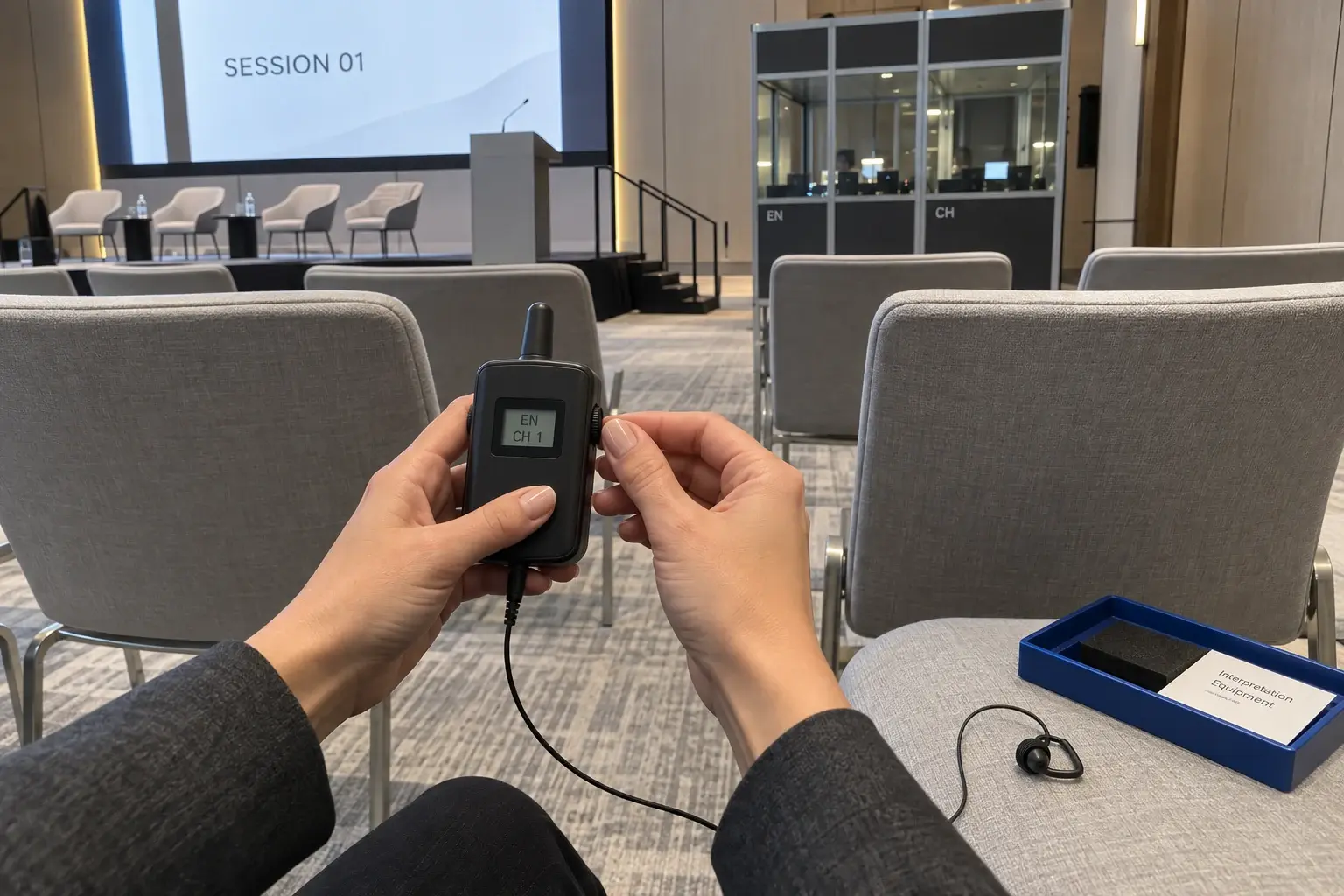
For an interpreted discussion, share the terminology and relevant versions with the interpreter. Keep references to models, units and conditions consistent across languages. If the teams will use different language versions of a document, identify discrepancies before they become competing descriptions of what the meeting is meant to resolve.
Test whether the agenda fits the available time
Allow time for explanation, interpretation, questions and checking the result. A schedule that counts only the main presentations can leave no room for the work that matters. If too many decisions are listed, rank them and move less urgent topics to another session or an exchange of documents.
Consider a hypothetical discussion about a trial order. The teams might need to establish the sample version, define the test, agree who supplies the input data and identify what a successful result would allow them to discuss next. Adding a full debate about annual volumes and every future territory may overload the session before the first trial is even understood.
Set a way to handle new information. If a key assumption turns out to be wrong, pause the dependent questions and record what must be checked. Continuing through the agenda mechanically can create decisions based on a premise that the meeting has already disproved. A revised agenda is useful when the change and its consequences are explicit.
Confirm the shared agenda and close the loop
Send a draft and invite the other team to identify missing subjects. Their response may reveal a different understanding of the project's stage. Resolve that difference before the meeting where possible. A list prepared by one side should not be described internally as a mutually agreed agenda until the other side has actually responded.
Reserve time at the end to distinguish decisions, proposals and open questions. Record the responsible person, the expected material and the next review point for each action. Preserve conditions attached to a response: willingness to examine an option is not the same factual status as confirming it. The legal effect of communications needs separate consideration for the particular transaction.
Use the agenda again after the meeting. Mark what was addressed, what changed and what could not be resolved. If the same question keeps moving to the next session, investigate the missing information, participant or authority. Updating the preparation is more useful than circulating the same list with a different date and hoping that repetition will produce a clearer answer.