
Clothing MOQ in China: planning a smaller first order
Editorial illustration
GURI Journal · Published 30 October 2026
A supplier offering a minimum order of 300 pieces has not yet told you enough to plan a collection. The number might apply to one style, one fabric, one colour or the whole purchase order. Sizes may be mixed freely, restricted to a fixed ratio or subject to their own minimums. These distinctions decide how much stock you will actually own.
GURI's approach is to work backwards from a useful assortment. Start with the products and sizes you can reasonably test in the market, then identify which production constraints prevent that order. Negotiating a lower headline number without understanding those constraints often moves the cost elsewhere.
Ask what the minimum applies to
Request a written breakdown by style, fabric, colour and size. Clarify whether different garments can share a material order and whether the same colour name means the same dye lot. A supplier's willingness to combine styles does not necessarily mean the mill will combine their fabric requirements.
For example, imagine an order of 240 garments in three colours. If the minimum is 120 per colour, that assortment does not meet it, even though the total looks substantial. This is an illustration, not a typical industry threshold. The actual quantities depend on the supplier's process and the product.
Manufacturer FAQs illustrate why one universal number is misleading. Changsheng Apparel distinguishes stock garments from custom development and states minimums at style and colour level. Treat such published terms as that manufacturer's offer, not as a rule for every factory in China.
Separate sewing capacity from material commitments
A sewing workshop may be able to make a small run while the fabric mill requires a larger purchase. Custom dyeing, printing, trims and branded packaging can create additional commitments. Ask which component drives the minimum and what happens to anything bought but not used.
The answer changes the negotiation. Paying a small-run sewing surcharge will not resolve a fabric minimum. Choosing an available fabric might. Reducing colours may help more than reducing sizes, provided the resulting size range still serves the intended customers.
Get the material specification before accepting a substitution. Similar appearance does not establish equivalent weight, stretch, shrinkage or handle. A cheaper way to meet the quantity target can become expensive if the garment fits differently or cannot be repeated consistently.
Choose the right production model
Ready-made stock with added branding, a modified existing style and a fully developed garment involve different work. Low quantities are easier to evaluate when the scope is explicit. A stock-service offer should not be compared directly with a quote that includes pattern development and custom fabric.
For an initial test, an existing construction may be appropriate if it fits the brand's requirements. But confirm which elements can change and which remain fixed. A supplier may accept a new label while declining changes to fit, seams or fabric.
If distinctive fit or construction is central to the product, development costs may be justified even at a small volume. The decision is commercial: what needs to be learned from the first order, and which compromises would make that learning irrelevant?
Keep the size mix commercially useful
Meeting a minimum by adding unwanted sizes creates stock, not demand. Build the proposed size ratio from the intended audience and any reliable sales evidence. Where evidence is limited, make that uncertainty visible rather than presenting a guess as a forecast.
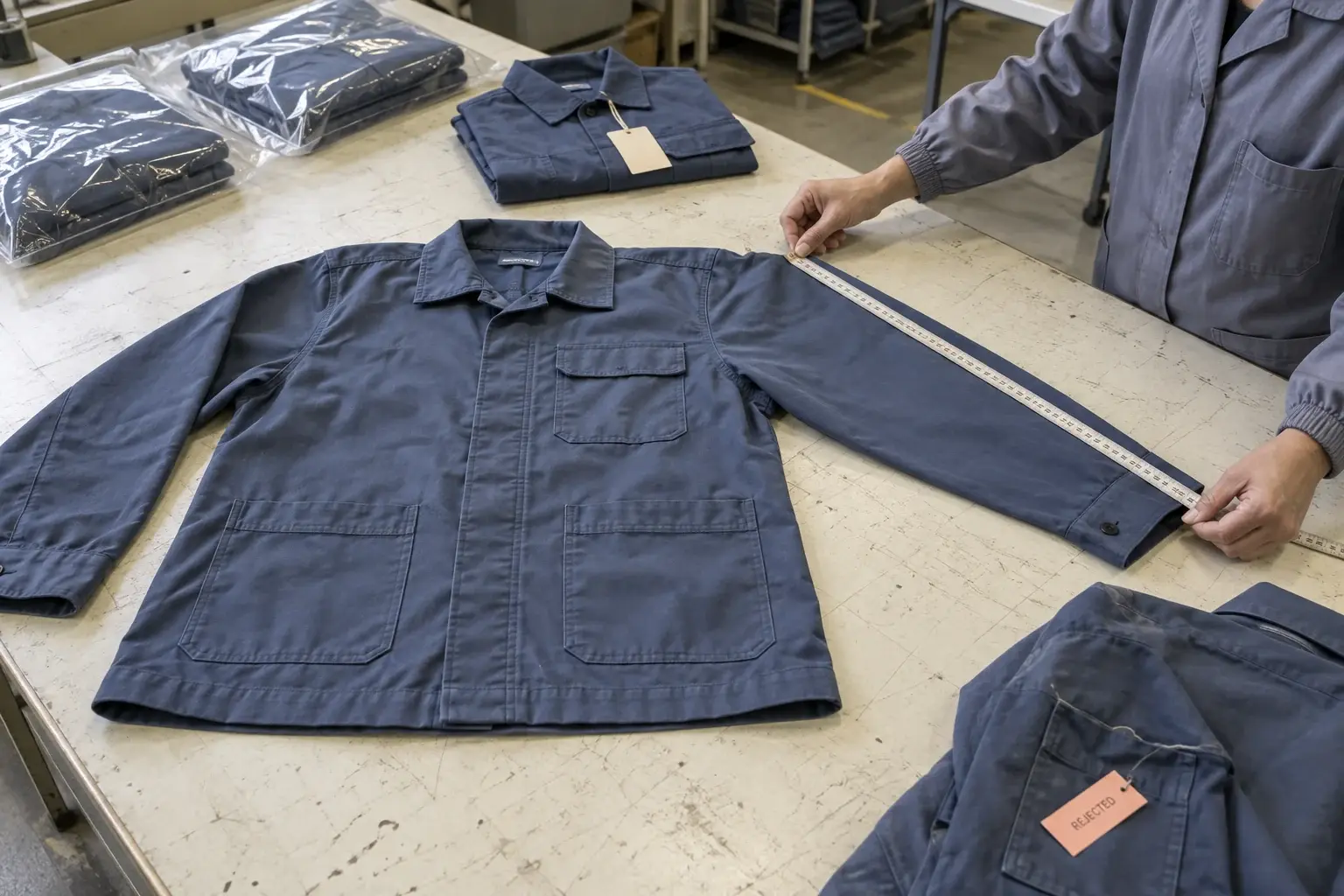
Ask whether the factory can vary the size mix within a colour and what cutting or production restrictions apply. A standard ratio may be convenient for the supplier but unsuitable for your market. Check the garment measurements and size grading before debating quantities: the labels alone do not describe fit.
For repeat orders, consider which sizes are likely to need replenishment. A low first-order minimum is less useful if every reorder forces you to buy the entire original ratio again.
Compare the full cost of each option
Separate development, samples, material commitments, unit production, labels, packaging and inspection. Then add the relevant shipping and destination costs for the actual route. Keep assumptions visible; an indicative freight estimate is not a confirmed total.
A lower unit price on a larger order can still require more cash and expose you to more unsold stock. Compare the total commitment and the useful assortment, not only the quoted price per garment. Avoid spreading development costs across a future order volume that has not been approved.
If unused fabric is purchased, document ownership, quantity, storage, identification and the conditions for later use. Paying for leftovers does not automatically secure access to them. Nor does stored fabric guarantee that matching trims will remain available.
Agree what a successful first order will prove
The first run should answer defined questions: whether the fit works, whether the factory can reproduce the approved garment, whether packaging is suitable and whether the assortment sells as expected. Keep production acceptance separate from the later market test.
Record the approved sample and technical version, inspection requirements and rules for changes. A supplier should not silently substitute a material to make the small quantity easier to produce. If a change is proposed, assess its consequences before approval.
The useful outcome of an MOQ negotiation is a feasible order with clear boundaries. The smallest possible number is not always the best choice. A slightly larger, well-defined assortment can be more informative than a very small run whose materials, sizes and repeat conditions remain uncertain.