
International sales contract brief: the facts your drafter needs
Editorial illustration
GURI Journal · Published 31 October 2026
A contract drafter can choose words, but cannot reliably invent the transaction behind them. If the buyer supplies only a product name and a price, important assumptions enter the document unnoticed. The factory may be different from the seller. An inspection may be expected before shipment even though nobody has arranged access. A payment milestone may depend on a document that will not exist until later.
GURI approaches the brief as a description of the intended business process. Its purpose is to make facts, proposed terms and unresolved decisions visible before they become contractual language. You do not need to solve every legal question first. You do need to show the drafter where a decision is still missing.
Start with the transaction, not a downloaded template
Describe what is being sold, who is buying it, where it will go and how the parties expect to perform. Explain whether the goods are already available, will be manufactured to order or require development. Include their intended use when it affects specifications, testing or the documents needed for the destination market.
Then identify the immediate decision. Are you preparing a first order, negotiating a framework for repeat purchases or checking the supplier's existing form? Those assignments have different boundaries. A framework may need a process for confirming individual orders; a single shipment may need a particularly clear specification and timetable.
Disclose anything that has already happened. Earlier purchase orders, accepted quotations, payments and production instructions are part of the facts. A drafter reviewing a transaction already under way needs the dates and content of those actions. Calling a document a draft does not by itself explain the position created by previous dealings.
Separate the companies from the people handling the work
List the legal seller and buyer with the identifying information available. Add the manufacturer, exporter, consignee and proposed payment recipient if they are different. Explain the commercial reason for the arrangement and provide the supporting documents. A trading company between a factory and a buyer is not automatically a problem, but its role must be understood.
List the people involved separately. A sales contact may coordinate production without having authority to approve a contract amendment. The brief should say which powers are confirmed, which are claimed and which still need checking. The appropriate evidence depends on the company, jurisdiction and proposed action.
Identify your own decision makers as well. Someone must approve technical requirements, commercial concessions, logistics and payment arrangements. If the drafter sends every question to a coordinator who cannot decide, preparation will stall inside the buyer's organisation even when the external adviser responds quickly.
Give each product requirement a usable reference
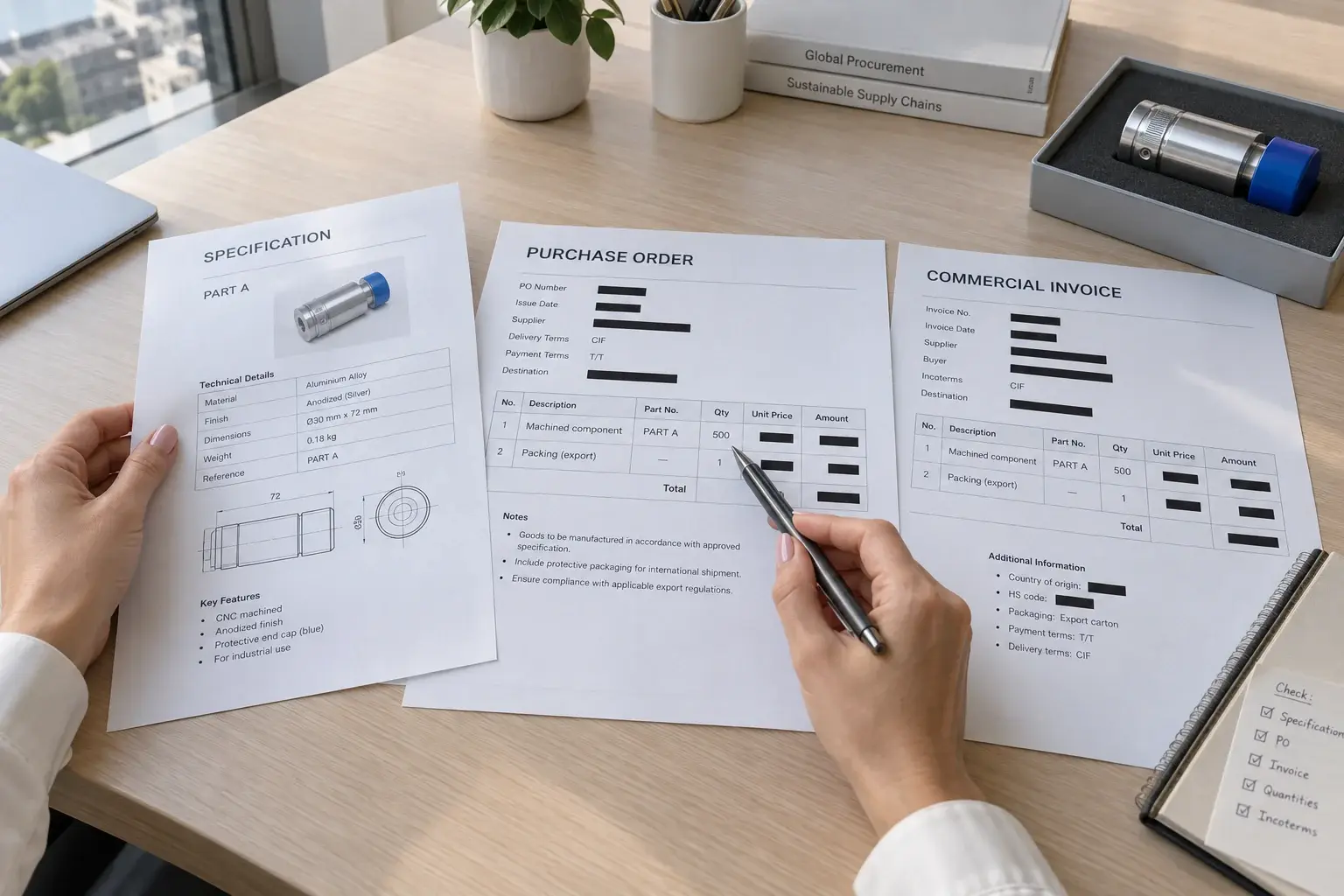
Attach the current specification, drawings, quotation and sample information. Explain which version represents the agreed intention. Keep superseded options available as history, but label them clearly. An unexplained folder of similar files creates a risk that the wrong dimensions or components will enter the contract.
For each important property, consider the expected value, the method of checking it and the point when the result will become available. A count of cartons can be established at packing. Performance under operating conditions may require a different test and additional technical information. The brief should reveal that difference.
If a sample is the reference, identify it and explain what it demonstrates. A surface finish sample may say little about the internal construction. A photograph may help with appearance without establishing material composition. Avoid asking a single reference to prove something it cannot show.
Mark unresolved choices explicitly. If the buyer has not selected a component, state the alternatives and the decision deadline. An arbitrary placeholder can become an apparent agreement once its origin is forgotten. Visible uncertainty is easier to manage than an unsupported specification that looks final.
Map payments against actual events
Set out the proposed instalments and their triggers. What must happen before each payment, who confirms it and what evidence does the payer receive? Include the price currency, intended payment currency, banking questions and any proposed payment to another entity. These matters should be checked against the real parties and available arrangements.
A hypothetical example shows why sequencing matters. A buyer expects the final instalment to follow inspection, while the seller will release the goods for inspection only after receiving the full price. The brief should expose that dependency before either position is turned into polished clauses. The parties need a commercial decision, not simply a better translation.
Distinguish readiness, dispatch, arrival and acceptance. Using the word delivery for all four can conceal a disagreement about timing. Show where the proposed transport arrangement begins and ends, who supplies the information needed for booking and which events depend on an external organisation.
The ICC explanation of Incoterms makes clear that these rules do not settle payment timing or transfer of ownership. Record the proposed rule, edition and named place, then address the remaining terms separately.
Connect documents to the people who need them
For each requested document, identify its purpose, issuer, recipient and expected availability. Technical staff, the carrier and the payment team may need different information. A general promise to provide all necessary papers leaves the drafter unable to assess whether the proposed sequence is workable.
Explain any destination-market requirements already identified and the source of that assessment. Do not assume that a certificate supplied for another product or route establishes compliance here. Questions requiring current product or jurisdiction advice should remain visible until the appropriate specialist has checked them.
Consider what happens if a document contains an error. Who contacts the issuer, who coordinates the correction and which later action depends on it? Even where the contract wording requires legal review, these practical facts help the reviewer understand the business consequence of a delay.
Describe the outcomes you need when something changes
Choose a few plausible deviations specific to the order: a delayed batch, an unavailable component, a failed check or a proposed partial shipment. Explain what the business would want to preserve in each case. That might be a launch date, compatibility with existing equipment or the ability to separate an affected part of the order.
State your commercial limits and areas of flexibility. Can the buyer accept an alternative material? Who may approve it? Would a later delivery still be useful? These are not merely drafting details. They determine which options the adviser should develop and which proposals require a management decision.
Ask for the finished work to distinguish corrected data, negotiated terms and unresolved legal questions. Define whether the assignment includes bilingual comparison, discussion with the other side and review of supporting documents. A clear brief gives the drafter enough information to produce a contract that follows the intended transaction, while showing exactly where further decisions are needed.