
Furniture inspection in China: a practical checklist before shipping
Editorial illustration
Guri Journal · Updated 30 October 2026
An expert guide from GURI
A furniture order can look excellent in photographs and still be difficult to sell or install. A hardware bag may be incomplete, drilled holes may not align, or loose components may scratch a finished surface inside the carton. Asking the factory to “send photos before shipment” leaves too much to interpretation.
Start with the decision the inspection must support. Are you deciding whether to release the batch, ask for rework or arrange further testing? A useful furniture inspection checklist connects each concern to an agreed requirement, a way of checking it and a record of the result. At GURI, we also consider the intended use: furniture for a busy café raises different practical questions from a cabinet for a private home.
Give the inspector one current specification
Prepare the model list, quantities, dimensions, materials, finishes and packaging requirements. Identify the approved sample and explain which properties it represents. If the order changed during negotiations, reconcile those changes before inspection. An inspector should not have to decide whether the older drawing or the latest message takes priority.
Separate measurable requirements from descriptions such as “premium finish”. Consider a hypothetical order for a matte cabinet. The colour might match while the gloss level differs noticeably. If the specification records only the colour name, a disagreement after production is predictable. Resolve the acceptance criterion while both parties can still adjust the process.
Flag checks that need documents, equipment or access to hidden components. If the information cannot be obtained during an ordinary visit, address that limitation before booking rather than expecting the report to fill the gap.
Inspect the actual batch and its variants
Confirm the production and packing status, the batch quantity and access to the goods. The report should explain how units were selected and how many were examined. A prepared showroom item is not sufficient evidence of the condition of the shipment.
Check whether different models, fabrics, finishes or mechanisms need separate coverage. A small variant can be missed if the selection does not account for the composition of the order. Agree the sampling approach and acceptance rules with the inspection provider in advance. Sampling gives information within a defined scope; it does not mean every unit has been checked.
Assemble furniture from a normal shipping carton
For flat-pack furniture, assembly can reveal more than another photograph of the front panel. Start with the parts, hardware and instructions supplied in an ordinary carton. Check whether the recipient can identify the components and assemble the product without improvising.
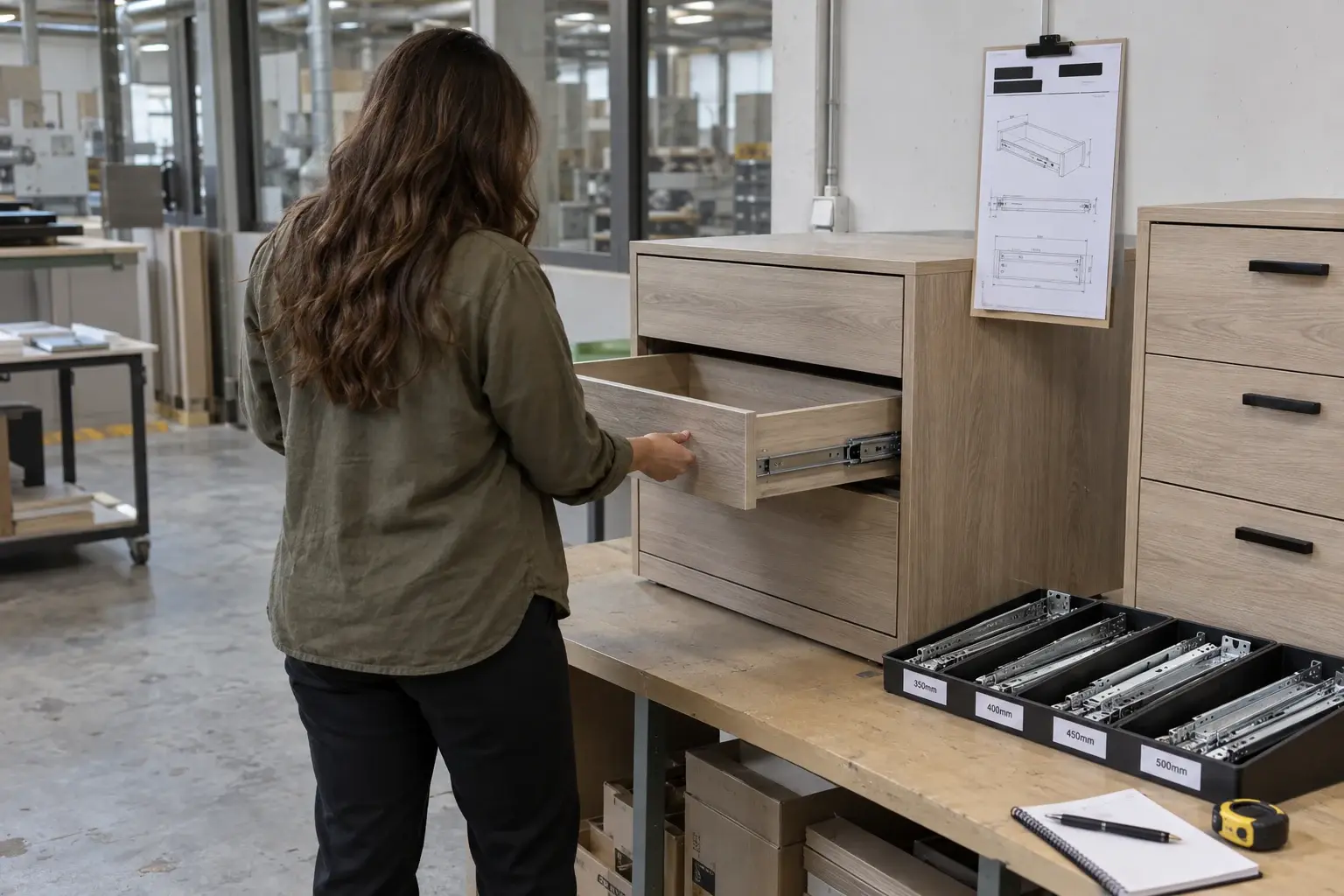
Look for missing fixings, misaligned holes, unclear part labels and inaccessible connections. Check doors, drawers and other moving components against the agreed requirements. If a factory worker adjusts a part during the visit, record what was changed and establish whether the same issue affects other units.
Avoid treating an improvised load test as proof of compliance with a standard. Where strength, durability or safety testing is needed, agree the relevant method and competent testing provider separately.
Distinguish visible defects from properties that need testing
Photographs can document scratches, chips, stains, stitching and visible joints when the image identifies the product and defect location. An ordinary visual inspection cannot establish every chemical, structural or long-term performance property. Appropriate records or tests may be needed for those questions.
SGS describes furniture inspections at several stages, from materials before production to finished goods and loading. The distinction matters: some evidence is easier to obtain before the product has been assembled and packed.
One external example illustrates the limit of appearance. On 30 October 2025, the US Consumer Product Safety Commission announced a recall of Ana dining chairs because their legs could break. This is a documented US recall, not a GURI client case or a finding about your supplier. It shows why construction deserves attention alongside finish. See the CPSC recall notice.
Open the packaging and follow the set
Examine how corners, projecting parts, glass and finished surfaces are protected. Check that hardware cannot move freely against delicate panels. Discuss packaging in relation to the intended handling and transport, rather than accepting “export packaging” as a complete description.
For furniture spread across several cartons, reconcile carton marks with the packing list and assembly information. The receiver needs to know which cartons form a complete set. For a hotel or other project, agreed room or item references can make distribution at the destination much easier.
Packaging tests, when required, should be planned for the particular product and route. A photograph of a sealed carton is evidence of its appearance, not proof that it will withstand all handling conditions. The report should distinguish a packaging inspection from an actual test.
Close the findings before deciding on shipment
A usable report identifies the batch, the models inspected, measurements, defects and limitations. “Pass” is meaningful only when the underlying acceptance criteria and scope are clear. Significant findings need enough detail for someone who was not present to understand the issue.
Agree the correction and how it will be verified. Replacing one faulty item does not establish that the underlying problem has been addressed across the batch. If a change affects material, structure or packaging, consider whether related checks need to be repeated.
Assign responsibility for the final release decision. Record which findings were closed, which were accepted under agreed conditions and which prevent shipment. The end of an inspector's visit and permission to load the container are different milestones.
To discuss a furniture inspection with Sarah Guri, prepare the specification, model list, sample details, packaging plan and expected completion date. Highlight the failures that would make the goods unacceptable. Those concerns should guide the work before a checklist is finalised.