
How do I check a supplier in China?
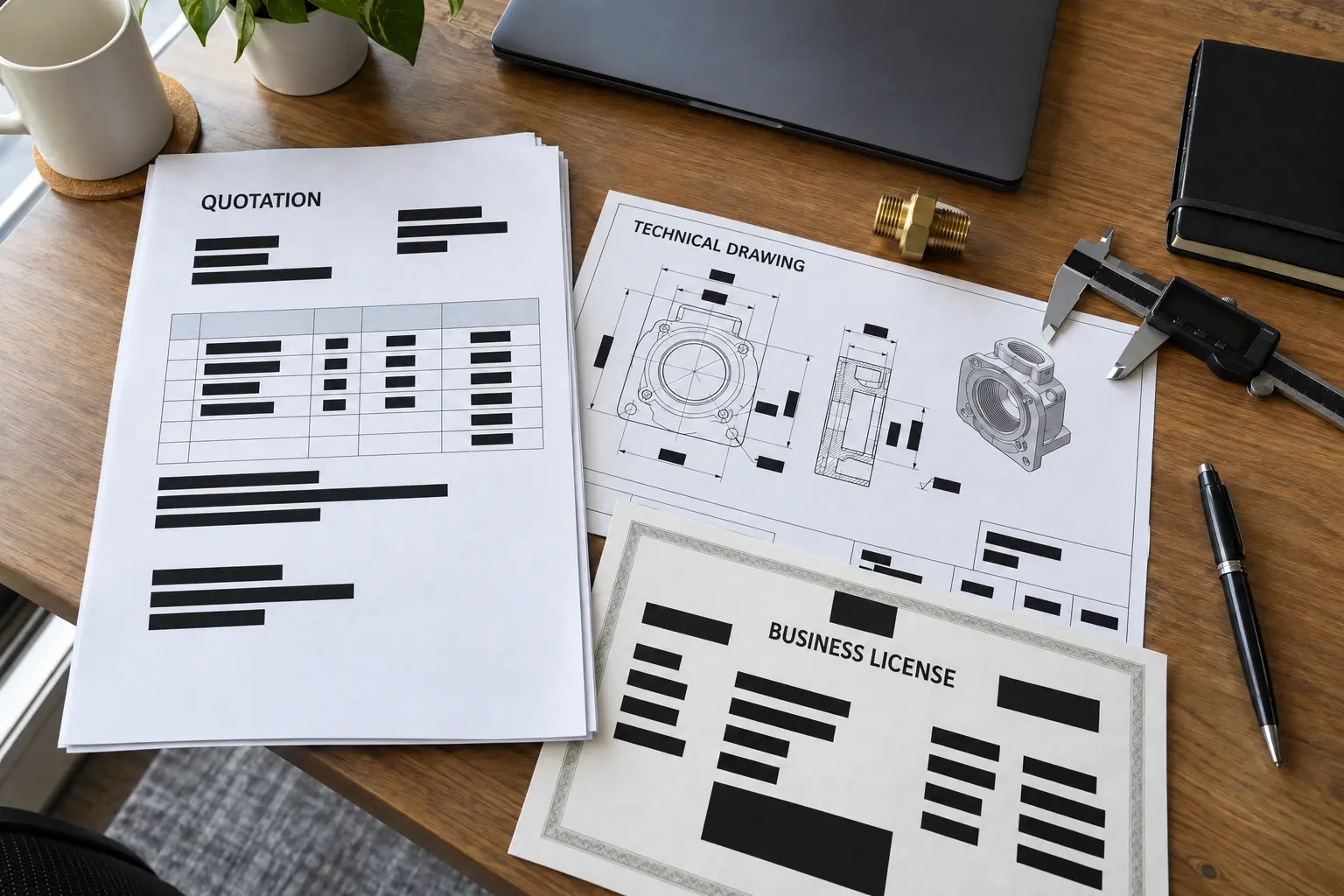
Editorial illustration
Guri Journal · Updated 30 October 2026
An expert guide from GURI
A supplier answers quickly, sends convincing factory photographs and offers a price that makes the order look worthwhile. The sample arrives and seems fine. It is tempting to treat the remaining steps as paperwork. Yet the company on the business licence, the person in your inbox and the factory in the photographs have not necessarily been connected to one another.
Supplier verification should help you make a decision about a particular order. Start with five questions: who is selling, who represents the seller, where the goods will be made, what you have agreed to buy and who will receive the money. Evidence that answers one question may tell you very little about the others.
Identify the company behind the quotation
Ask for the company's full registered Chinese name, registration identifier, address and business licence. Compare the details with current official registration information, then check the contract and invoice against the same identity. An English name in a catalogue may be a trading name; it is a poor starting point if you cannot connect it to the registered seller.
Reading documents side by side is more useful than collecting a large folder of attachments. If three names appear, ask what each company does. Which one accepts the order? Which one makes the product? Which one is responsible if the specification is missed? A group relationship may explain a difference, but it still needs to be clear in the transaction.
Check the person as well as the business
A real company's documents can be copied. Confirm your contact's connection to the business through a separate channel, such as a number independently obtained from a reliable company source. Ask whether the person handles your order and whether the quotation is recognised.
Take particular care when payment instructions change. Replying to the email that announced a new account does not provide independent confirmation. The FBI advises checking payment requests and changes to account details through a trusted contact, and warns about pressure to act quickly. See its business email compromise guidance.
Ask how your product will actually be made
A large workshop is impressive, but size alone does not answer whether the supplier can make your item. Begin with the product requirements: material, dimensions, tolerances, finish, components, quantity and packaging. Then ask how the proposed production process will meet them.
Find out which operations happen at the stated facility and which are subcontracted. Who checks the subcontractor's work? Who approves a material substitution? Where will the final inspection take place? These questions reveal the handovers at which an otherwise straightforward order can go wrong.
A live video call can help you ask to see a particular machine or process. It is still a view of a selected place at a selected moment. Where the order depends on equipment, capacity or technical controls that cannot be established remotely, consider an on-site assessment or appropriate testing. Give the assessor specific questions to resolve.
Turn the promised lead time into a sequence
“Thirty days” is not a usable production plan until you know when the clock starts. It may start after the deposit, sample approval, receipt of material or confirmation of the final drawing. Ask the supplier to separate material purchasing, production, quality checks and preparation for dispatch.
Also identify the decisions your own team must make. If packaging artwork is needed before materials can be ordered, a delayed approval changes the schedule. It is easy to overlook this while negotiating the unit price, then discover that both parties have been counting from different dates.
Make the approved sample a reference
A good sample is useful because it gives both sides something concrete to discuss. It becomes much more valuable when the agreed properties are recorded. Keep the approved sample where practical, along with dated photographs, measurements and the final specification.
Imagine ordering items that will be sold as matching sets. A slight shade difference may be acceptable for separate products but unacceptable within a set. That distinction belongs in the requirements before production. Once the batch is finished, the discussion becomes a dispute about rework, cost and the shipping deadline.
Agree what happens if the batch fails inspection
Arrange access to the goods before the order reaches the dispatch stage. Agree when inspection takes place, what information the inspector receives and which characteristics will be checked. The report should identify the batch and the requirements used for comparison.
Then discuss the uncomfortable scenario: a mismatch is found. Who decides whether it can be corrected? Who performs the correction? What evidence confirms that the affected goods have been rechecked? How does that affect the next payment and dispatch? Clarifying the process early gives both parties a way to handle a problem without improvising under deadline pressure.
The scope of inspection needs to fit the risk. Examining a sample does not prove that every unit is defect-free. Visual inspection also cannot establish hidden safety characteristics. Where safety, regulated properties or performance are material to the purchase, determine the necessary assessment separately for that product and destination market.
Reconcile the final documents before the deposit
Check the beneficiary separately. If a different organisation will receive the payment, establish its role and the documented basis for the arrangement. Discuss the proposed transaction with your bank and, where needed, a qualified adviser before sending funds. An explanation that the money will arrive faster does not resolve responsibility for delivery.
Consider a hypothetical example. Your sample is approved and the price is agreed, but the manager sends an invoice from another company on the evening before payment. Your earlier verification remains useful. However, it did not cover this new participant. Pause to understand the change and confirm the instructions independently before relying on the earlier conclusion.
Record the decision and the unanswered questions
The person approving payment needs a short, usable account of the findings. State which company is selling, how the representative was confirmed, where the order will be made, what acceptance requirements apply and who will receive the money. List unresolved issues alongside the action needed to resolve each one.
At GURI, we approach verification as preparation for a specific purchasing decision. Its value lies in knowing what has been established, what remains uncertain and what needs to happen before the next commitment. Keep the file for repeat orders, then review the changes: product, volume, facility, contact or payment details. That is more useful than either trusting everything indefinitely or starting from scratch each time.
To discuss a supplier with Sarah Guri, prepare the quotation, draft contract, specification and invoice, together with the points you cannot reconcile. Those materials make it possible to identify the checks that would most directly improve the decision.