
How do I pay a supplier in China?
Editorial illustration
Guri Journal · Updated 30 October 2026
A supplier has accepted your order and sent an invoice. The next step appears straightforward: choose a payment method and send the deposit. Yet a successful transfer answers only one question—whether money reached an account. It does not establish that the recipient is entitled to collect it, that the invoice reflects your latest order, or that production will start under the conditions you expect.
GURI approaches payment as part of the purchasing decision. Before looking for a route, establish the parties, the obligation and the evidence required at this stage. Banks and service providers must confirm whether they can handle the actual transaction. Somebody else's successful payment is useful context, but it is not approval for yours.
Know what this payment is meant to achieve
Paying for a sample is different from funding production or releasing a final balance. Write down the purpose in terms that a colleague outside the negotiations can understand: which order, which goods and which milestone? An invoice that merely says “goods” may be too vague when several orders are running at once.
Check what the amount includes. Tooling, samples, export packaging and transport may have been priced separately. Keep those distinctions visible. Otherwise, a seemingly small revision can conceal a duplicate charge or an expense that nobody included in the purchasing budget. The cheapest unit price does not necessarily produce the lowest total cost.
Reconcile the latest documents, not just the numbers
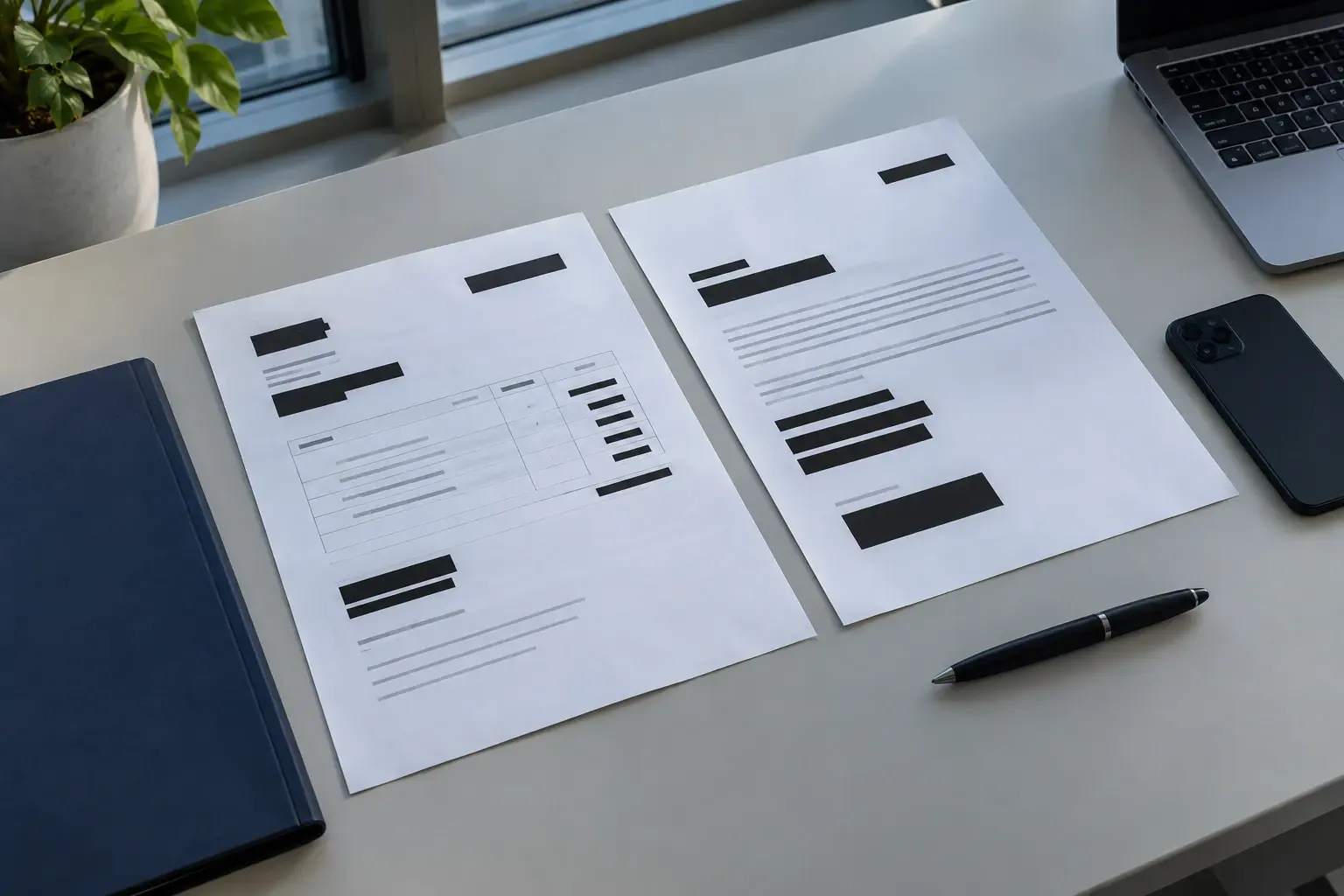
Compare the seller, order reference, specification, quantities, currency and payment stage across the agreed documents. Confirm that the invoice incorporates the final commercial changes. Save the approved set together and identify any earlier versions it replaces.
Consider a hypothetical order whose quantity has been reduced. The supplier changes the total price but leaves the deposit amount from the previous version. The bank details are correct and the invoice looks professional; the discrepancy appears only when the documents are compared. This is an illustrative example, not a GURI client case. It shows why account verification and commercial approval are separate checks.
Understand why the beneficiary may differ from the seller
A factory name, a trading company's name and a bank beneficiary may be different. That alone does not establish fraud. It does mean the buyer needs a clear explanation of each participant's role and an agreed basis for paying the proposed recipient.
Ask who will acknowledge receipt, who remains responsible for the goods and how the payment relates to your obligation under the order. “They are our partner” is not enough to answer those questions. Have the arrangement reviewed and documented as appropriate before sending funds, while changes are still practical.
Matching names do not resolve every risk either. A genuine supplier can issue the wrong invoice or miss a delivery date. Treat each piece of evidence as answering a specific question, rather than allowing one reassuring document to stand in for the whole review.
Treat a new bank account as a change that needs verification
An email can arrive in a familiar thread with the expected signature and still contain fraudulent instructions. Pause approval and contact the supplier through a previously verified channel, independent of the change request. A number supplied only in the new email does not provide that independence. The FBI's business email compromise guidance recommends verifying payment and account changes separately.
Record the reason for the change, the approved details and who confirmed them. Then reconcile the documents again. A loading deadline does not make an unexplained discrepancy less significant. Agree within your team who can stop a payment so that verification does not depend on winning an argument at the last minute.
Define the event that releases the next payment
“Balance before shipment” can mean different things to the two sides. The factory may regard production as complete when assembly finishes. The buyer may expect packing, inspection and agreed documents to be complete as well. Clarify that difference before it becomes a dispute.
Describe the evidence needed for each milestone and include it in the agreed terms. Do not assume a familiar deposit percentage is suitable for every product or supplier. A customised product with tooling and a repeat order of standard stock create different commercial exposures.
The International Trade Administration's Trade Finance Guide explains several payment instruments, including advance payment, letters of credit and documentary collections. They distribute risk differently. A letter of credit depends on the specified documents; it is not a substitute for checking the physical goods. Discuss availability, costs and conditions with the relevant banks for your transaction.
Ask a payment agent to explain the complete arrangement
If an intermediary is involved, identify who contracts with you, who receives your money and who pays the supplier. At each step, establish the obligation, the evidence you receive and the party responsible if the next step fails.
Ask when the exchange rate is fixed, which charges are included, what could change the final cost and how a rejected transfer is handled. A quotation is easier to assess when the refund procedure is as clear as the payment procedure. Use the genuine transaction purpose; an intermediary does not remove applicable banking or legal requirements.
Follow the money through to confirmed receipt
A payment instruction and confirmed receipt are different events. Decide who checks that the funds arrived and who tells the factory to start the next stage. Without that handover, the buyer may consider the task finished while production is still waiting.
If the supplier reports non-receipt, investigate the first transfer through your bank before arranging another. If fraud is suspected, contact the bank immediately and preserve the original messages, invoices and payment records. Ask about available recovery measures and report the incident to the appropriate authorities. Recovery cannot be promised.
Keep a decision record that another person can use
Before approval, a colleague should be able to identify the order, the recipient, the current document versions, the condition that permits payment and the next action after receipt. Put the answers with the order, rather than leaving them scattered across individual chat accounts.
For a discussion with GURI, prepare the goods description, parties, amount, currency, payment stage and unresolved issue. Redacted documents can support an initial review. Online banking access, passwords and authentication codes are not needed. A useful outcome is a clear list of what has been confirmed and what still needs to happen before the payment decision.